
To start the adventure off on the easy path, some friends came over and we decided to use portioned ingredients to make the pizza dough. We purchased Bob’s Red Mill gluten free pizza crust mix which contains whole grain brown rice flour and the yeast necessary for the recipe. To create the dough we did need to add 2 eggs to the water and yeast mixture and oil for the bowl was understandably not included.
Following the directions on the package was a mistake. The very sticky dough insisted on ripping each time we picked it up. It started well in the Kitchen aid mixer with the dough hook in place, but tumbled down hill. The dough would rip apart and had a consistency I have never before experienced. I can only describe it as too wet and sticky, dense, unwilling to stretch, and lacking. After reading the reviews on the Bob’s Red Mill website, after the fact, I discovered I am not the only one with this same unusable dough.
My attempt to salvage lunch involved adding about 3 cups of flour in the end. Fortunately for me, no one in my party had any gluten aversions and we were able to use bread flour (what I had on hand – traditional flour would also have the same effect). If you plan ahead and want to use this flour, I would recommend 2 packages of flour for the ingredients recommended for 1 package’s worth (e.g. don’t double the eggs, water, and oil for the 4 cups of flour).
We managed to make a sort of dough worth using by gradually adding flour and kneading it on the counter, and a bit more in the bowl. My friend insisted on helping, which I generally encourage, however it was painful to watch someone else knead differently (incorrectly?) than how I do it. A quick lesson in technique (folding and handling) and I took over. Definitely need to learn to be less of a control freak. But it was a challenging dough. We left it in the fridge to rise while we drove to the store to get cheese, sauce, and grapes (the latter being our snack as we waited for the bake).
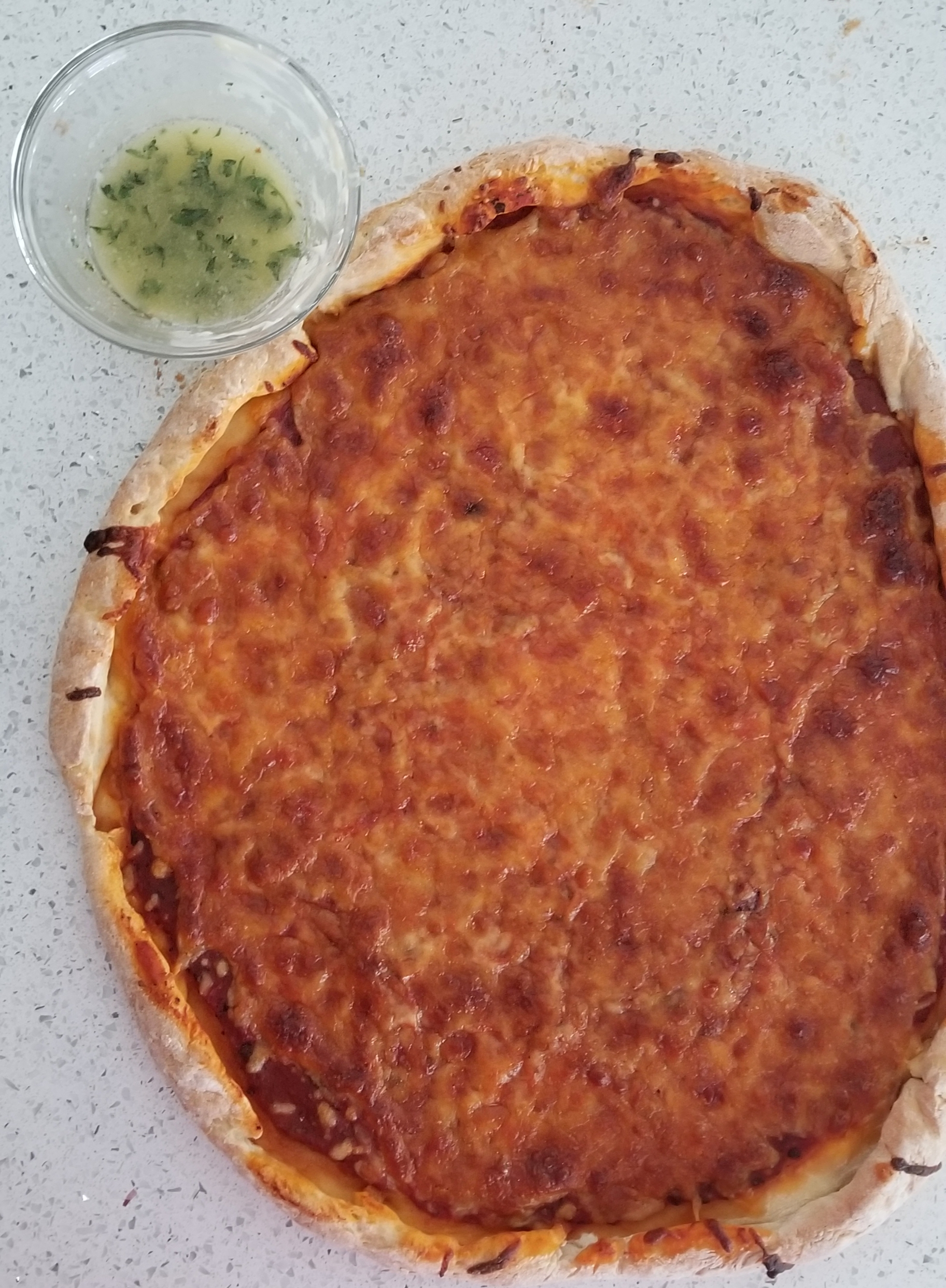
The dough was enough for 2 ~12 inch pizzas. We preheated the oven to 425F and free formed them on 2 oiled, air-bake cookie sheets. For one of the pizzas we baked the crust alone for 8 minutes before removing it and added organic basil marinara (rather than pizza sauce), 8 oz shredded Colby-jack cheese, and salami (my favorite pizza topping). To the other pizza we did not cook it ahead, and did not add salami. We cooked them both on convection (changed to convection when we added both pizzas) for 20 minutes, removed the pizza with the salami and pre-bake, turned the oven off, and left the other pizza in there for another 10 minutes. The crust on both ended up with an even tan color, not too dark, but definitely fully cooked. They were delicious. The sauce was plentiful and sweet, the cheese was easy to bite in to and didn’t pull like a mozzarella deep dish pizza would, and the grease pulled mostly in the salami slices. We did not broil the cheese, and it definitely did not need it. With the oven at 425F it isn’t far from a broil anyway.
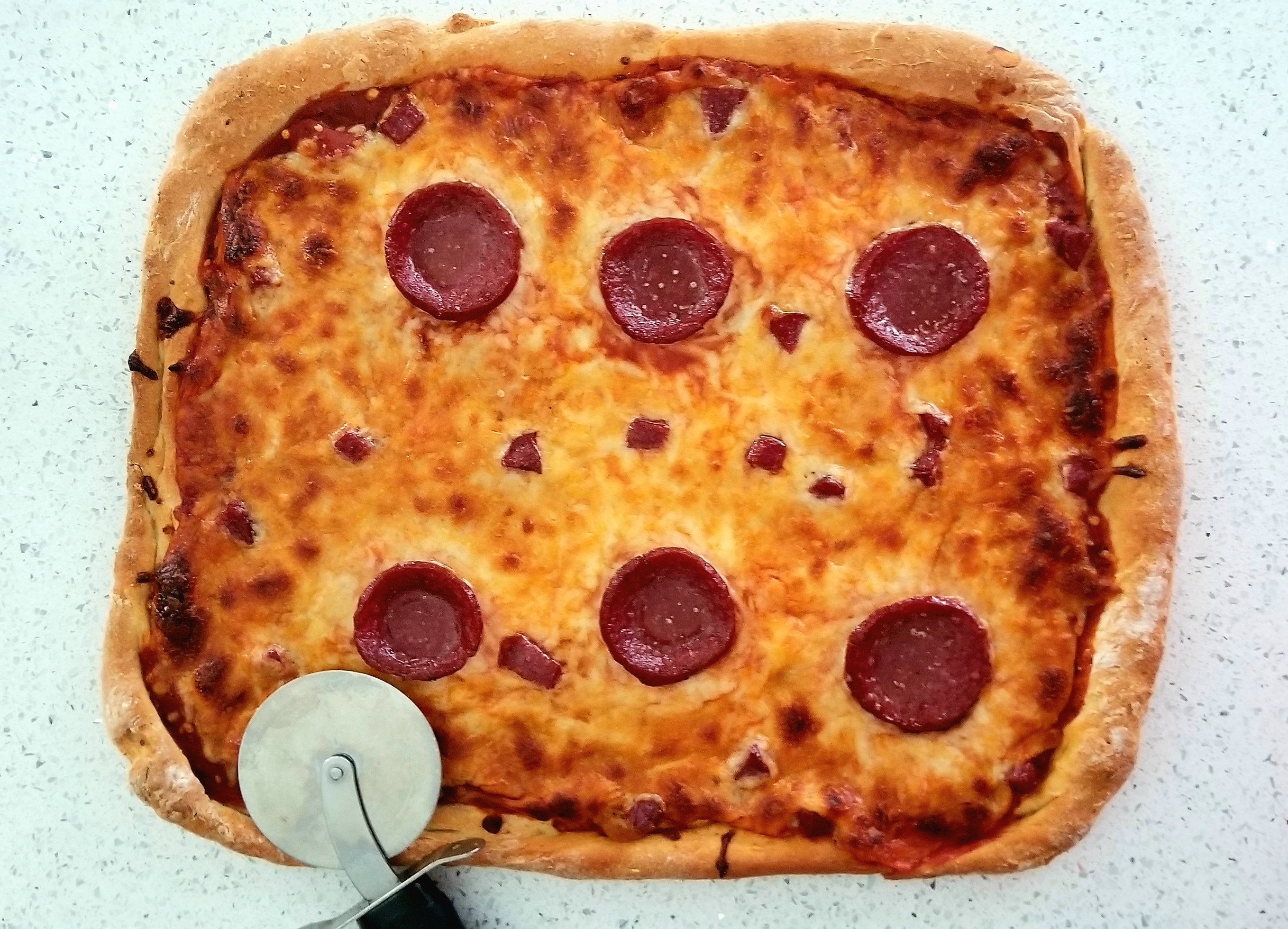
Tips for next time: Cooking the dough for a few minutes first ensures the dough will not be raw with you cut into the middle. If you want a stringier cheese, mozzarella would be a better choice. For children, I would recommend the highest fat variety shredded (or block to shred yourself) so that there is an even layer across the whole pizza. For adults, fresh mozzarella sliced and plopped around the pizza would provide a more authentic flavor. Although our pizza ended up not being gluten-free there is still the possibility to use to packages of gluten-free flour, or possibly adding some almond flour (though I would not recommend due to the difference in the textures). Use marinara if you like a sweeter sauce and note it will thicken when it cooks.
Scoring: Giving the original recipe a 3 out of 10. The end result deserves a 6.5 out of 10. We all really enjoyed it, but it wasn’t gluten-free. It did reheat well though.
 Food of the Month